
Baja California travel has a way of changing you quietly.
I didn’t know it then.
You never do.
But the first place I stayed when I landed in Baja was a small boutique hotel called Drift.
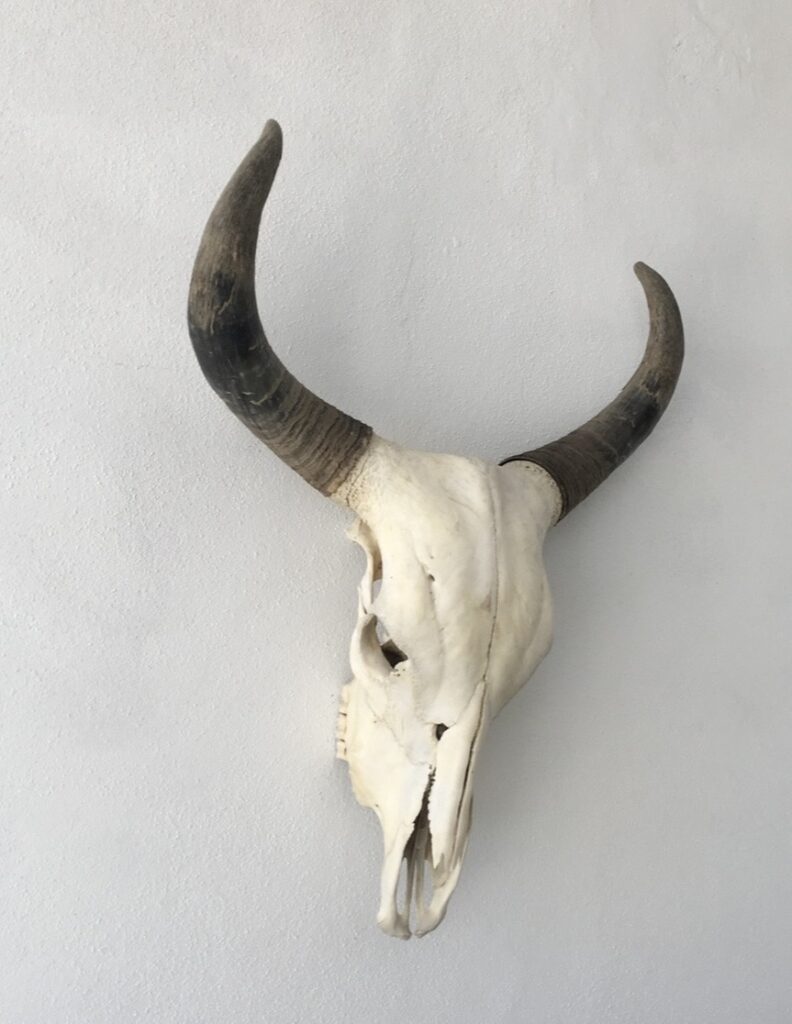
Minimal cement architecture. Clean lines. A bull skull mounted on a white plaster wall like a statement of intent. A mezcal bar downstairs where the drinks were serious and the lighting was exactly right. The kind of place that knows what it is and makes no apologies for it.
That first evening I sat alone in the small pool with a Centenario añejo over ice and First Aid Kit playing quietly from my phone. Out of My Mind.
That felt about right.
I had left behind a city I needed a break from, flown to the tip of a peninsula I’d never visited, and checked into a boutique hotel called Drift. Whatever was happening I was fully committed to it.
Occasionally a staff member would pass in the distance or glance over with a look that asked — clearly, warmly, cutting directly through any potential language barrier — do you need anything?
I didn’t. I needed exactly this.
After a day of travel, with the kinetic relentless energy of San Francisco still humming somewhere in my system, the pool was doing its work. The añejo was doing its work. The Baja evening air was doing its work. I could feel the gears beginning to slow. The frequency shifting. Something loosening in my chest that I hadn’t realized was tight.
I sat there until the light was gone.
Welcome to Baja.
The First Night in Baja California — San José del Cabo
I got dressed and walked down the road to La Lupita for dinner.
Tacos. A cold beer. A local bossa nova quartet playing on an elevated stage above a comfortably full house of people at happy hour. The music floated over the joyful hum of diners like it had always been there and always would be. I sat longer than I needed to, watching the room, listening to the band, eating slowly.
Afterward I walked through Plaza Mijares watching local families gathered in the square the way they do in Mexican towns on warm evenings — unhurried, present, belonging to the place in a way that visitors never quite do. I window shopped the galleries on Calle Álvaro Obregón without buying anything.
Just looking. Just adjusting.
San José del Cabo’s arts district has a quality of evening that I wasn’t prepared for. Not the Cabo of spring break mythology — not the noise and the neon and the aggressively good time. Something quieter and more considered. A town with an actual life happening in it, graciously allowing visitors to observe from the edges.
I walked back to the Drift and slept well for the first time in weeks.
The Viceroy and the Gate
I had told people I was going on a research trip. That was technically true.
The real version was this: a friend had bought a small piece of land near a kite surfing village called La Ventana a few years prior and kept telling me to come see it. I had been sitting with a vague but persistent idea — a small boutique hotel, some casitas, a life split between California and the Sea of Cortez — and I needed to know whether it had anything real underneath it or whether it was just the kind of idea that sounds good at midnight and dissolves in the morning light.
So I went.
The next morning I checked into the Viceroy for a day of unashamed poolside luxury before heading north. The transition felt appropriate — one last full immersion in the comfortable and the curated before stepping off the map.
My friend’s place was off-grid in El Sargento, about an hour north of La Paz. She had been one of the first to buy into an eco development there — a site with lightly maintained dirt roads, sectioned plots, and not much else. What it did have was a large front gate.
Which was locked when I arrived.
I parked the Jetta — a small white rental that would spend the next ten days collecting the dust of Baja on its previously clean surfaces — grabbed my backpack and my OXXO cooler of beer and snacks, and bent under the gate.
There were exactly three homes built in the entire development. Hers was right where the crude hand-drawn map indicated — X marking the spot on a folded piece of paper that had seemed like a gamble when I left but turned out to be more than enough. In Baja, it turns out, you rarely need more than a general direction and the willingness to keep going.
She and her boyfriend had spent two previous summers building it out themselves. Cement cube. Kitchen and living space on the main level, loft above. Simple, clean, functional — the kind of building that knows the difference between minimalism as aesthetic choice and minimalism as honest response to where you are.
The crown jewel was the oversized glass doors facing east. They opened completely, dissolving the boundary between inside and outside, between the kitchen and the porch and the vast Baja morning beyond.
And beyond the porch — through the middle distance of saguaro cactus and the sage and khaki of the land — the Sea of Cortez.
I cracked a Modelo from the OXXO cooler and sat down in a plastic chair facing east. Led Zeppelin’s Going to California came on — a song about longing for a place I had just left — and I watched the Sea of Cortez turn gold in the last light. The Cerro El Puerto mountains rose behind me. The silence was the kind that has texture to it.
The irony of the song was not lost on me.
I could see immediately why she had taken the chance. Invested before almost anyone else. Built her escape at the end of a dirt road behind a locked gate in a development that barely existed yet.
Some people see what a place is. Others see what it’s becoming.
She saw what it was becoming.
Calle Mar De Cortez — The Dream and The Math
The next morning I explored the hot springs at Playa Agua Caliente and started looking at land.
On the way I had stopped in Los Barriles for lunch at Taqueria Lily’s — tacos camarones, the kind that recalibrate your understanding of what a shrimp taco can be — before winding along the coast through La Ventana, taking my time, taking it all in. It was the off season. Fewer people than what I imagined it looked like in the fall when the wind arrived and the kite surfers gathered from every corner of the world to harness it.
The land near El Sargento came in double lots stretching from the road to the shore. The price of a parking space in San Francisco. In exchange: land, beach, the abundance of the ocean. Whales that migrated past every year and breached a few hundred yards out.
My mind started running.
I could bring building supplies down on pilgrimages across the land. Build piece by piece. A few casitas first — simple, honest, beautiful — for the kite surfers and scuba divers when I wasn’t there. Then a small boutique hotel. An eco resort. A place for friends dispersed across different cities and different lives to gather and reconnect.
I could see it completely. The cement and glass. The indoor-outdoor living. The Sea of Cortez through every eastern window.
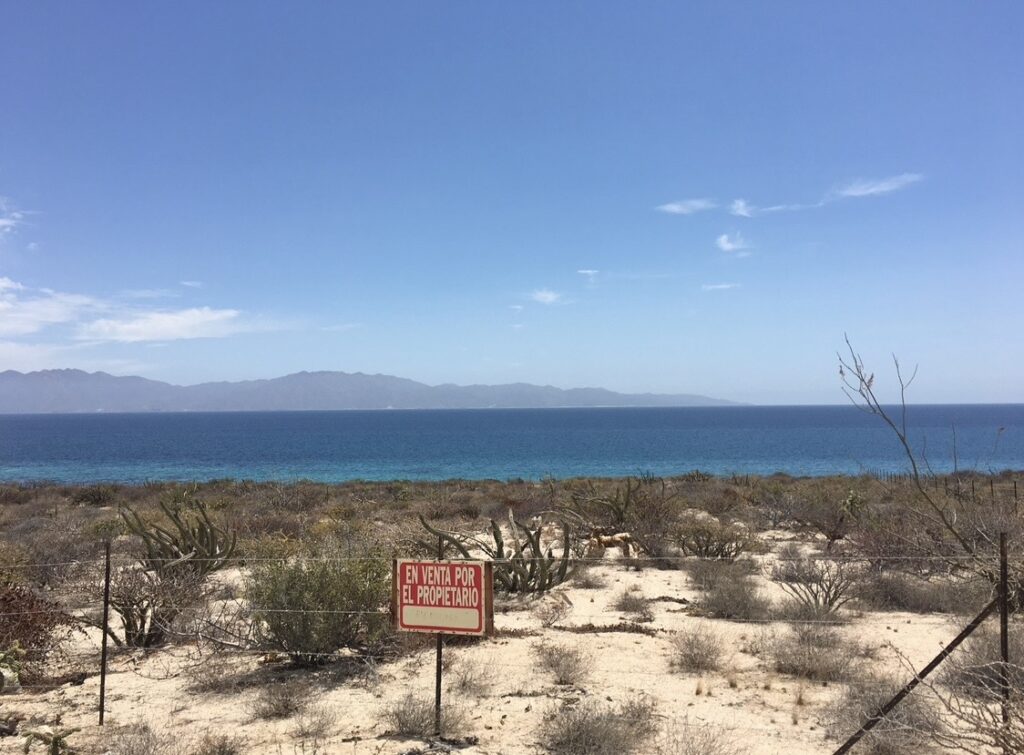
Standing on the side of Calle Mar De Cortez next to the dusty white Jetta, looking over a barbed wire fence at a hand-painted for-sale sign with the real estate agent’s number barely legible in the sun, I let myself want it fully for a few minutes.
Then pragmatism started seeping in.
There is no municipal fresh water supply in La Ventana. The wells and aquifers face increasing salinity from a dropping water table. Residents rely on delivered trucks and refillable garrafones — five-gallon jugs of purified water for every cooking and drinking need. One account I’d later read described the situation as a kind of water apartheid — reliable supply for high-end tourism developments, inconsistent brackish water for residential areas.
What if supply became scarce? What if my eco tourism dream became a burden rather than a benefit to the people who actually belonged here? What were the real protections for foreign buyers? What was I walking into?
And underneath those practical questions — a deeper one I wasn’t quite ready to ask out loud: What right did I have to show up somewhere and build my dream on land that had belonged to someone else’s story long before mine arrived?
I stood there long enough that a lizard crossed the road in front of me without concern.
The sea was that impossible blue. The mountains on the far shore were fading into afternoon haze. A cactus wren landed on the barbed wire six feet away, regarded me briefly with complete indifference, and flew off.
I got back in the Jetta.
The Restaurant
That evening I found a small restaurant on the edge of La Ventana.
Small is generous. It was essentially a family’s front room arranged around a few plastic tables, a hand-written menu on the wall, and what appeared to be three generations moving quietly between the kitchen and a back room where a television murmured. Two kids — maybe four and seven — played near the doorway. The younger one, a little girl, caught my eye and smiled shyly before disappearing behind the door frame.
The Abuela was cooking. I could hear it.
I sat down and studied the menu with the focused attention of someone who still believed menus were binding agreements.
“We don’t have that tonight,” she said.
I pointed to my second choice.
She shook her head. Apologetically but firmly.
I put the menu down. “What do you suggest?”
She didn’t hesitate. A whole fried fish. Caught today. Right outside in the bay.
I said yes without a second thought.
What arrived twenty minutes later recalibrated something in me permanently. The fish was perfect — crisp skin, sweet fresh flesh, nothing between it and the plate but a squeeze of lime and the fact of its freshness. A side of ceviche that tasted like the ocean had just decided to become food. A cold Modelo sweating quietly on the plastic table.
I ate slowly. The family moved around me. The television murmured. The little girl came back to study me from a safer distance, deciding something.
I thought about the land I’d looked at that afternoon. The price of a San Francisco parking space. The water trucks. The for-sale sign on the barbed wire. The math that was both simple and complicated depending on which questions you were asking.
And then I stopped thinking about the math.
Because what I was actually buying — what any of those lots was actually offering — wasn’t square footage or sea views or investment potential.
It was this. This meal. This family. This little girl deciding whether a stranger deserved a smile. This Abuela who knew what was fresh today and offered it without ceremony.
The best parts aren’t for sale.
La Paz and What Balandra Does To You
Highway 286 north to La Paz felt like crossing into a different chapter.
La Paz has infrastructure. A real malecón where locals walk in the evenings with the unhurried confidence of people who have nowhere more important to be. Side streets with soul. Seafood that has earned its reputation across decades rather than algorithms. The feel of a city that functions for the people who live in it rather than the people visiting — which, if you’ve spent any time in Cabo, registers as a form of radical authenticity.
I walked the Paseo Álvaro Obregón. Ate well. Slept well.
In the morning I went to Playa Balandra.
I’m going to try to describe it and I’m going to fall short and I want you to understand that the falling short is accurate.
The water is turquoise in the shallows — genuinely, impossibly turquoise, the kind of color that makes you briefly distrust your own eyes — deepening to cobalt toward the center of the protected bay. The beach is white and fine. Dark volcanic mountains rise directly from the far shore. The whole thing is cupped like hands holding something precious and not quite believing their luck.
I walked through the shallows to the far side where smaller scalloped beaches sat completely empty. I put on Empire of the Sun — Standing on the Shore. I was standing on the shore. The literalness of it made me smile at nobody in particular.
A private sandy cove. Slight breeze. Perfect temperature. The kind of silence that isn’t the absence of sound but the presence of something harder to name.
I put the phone away.
A pelican passed overhead with the ancient unhurried confidence of a creature that has never once questioned its place in the world. Somewhere behind me two kids were arguing about something in Spanish, the argument losing urgency as the water reached their waists.
Jacques Cousteau called the Sea of Cortez the aquarium of the world. Standing in Balandra I understood this not as hyperbole but as simple accurate description.
I thought about San Francisco. About the rent and the noise and the particular quality of exhaustion that comes from living in a city that is always performing its own importance.
Then I stopped thinking about San Francisco.
Some places ask you to be present in them. Balandra doesn’t ask. It simply makes being anywhere else feel temporarily impossible.
Later I drove to Tecolote Beach nearby — different energy, less secluded, wonderful in its own way with Isla Espíritu Santo sitting just offshore like a rumor of somewhere even better — and spent the rest of the afternoon watching the light change over the water.
I stayed in La Paz that night content in a way that felt unfamiliar and worth paying attention to.
Todos Santos and the Pacific
Fleet Foxes came on as I turned onto the highway toward Todos Santos the next morning — Mykonos, that opening guitar figure that sounds like it was written for exactly this kind of road on exactly this kind of morning. Windows down. Warm air wafting in off the desert. The Pacific somewhere ahead. I turned it up.
Todos Santos knows what it is.
That’s the first thing you notice. A town that has been doing exactly what it does since 1733 and has arrived at a kind of settled confidence about it. Fourth generation families running tortillerías two doors down from galleries selling paintings for four thousand dollars, and somehow both things feel completely right. Neither apologizes for the other.
I stayed at Villas La Mar and La Poza Boutique Hotel for a couple of days. Walked slowly. Ate well. Watched the afternoon light do things to the bougainvillea that seemed slightly too beautiful to be accidental.
A man was repairing a fishing net outside his house, fingers moving through the mesh automatically the way hands do when they’ve performed a task ten thousand times. He nodded when I passed. I nodded back. We didn’t share enough language for conversation but we understood each other completely in the way that people do when they’re both just existing in a place without needing anything from it.
Then El Pescadero and Los Cerritos — and the Pacific.
The difference between the two sides of the Baja peninsula is not subtle. The Sea of Cortez is protected, calm, warm, intimate — a body of water that feels like it belongs to the people who live beside it. The Pacific arrives having traveled thousands of miles with the full weight of the ocean behind it. The water is colder. The waves mean business. The vistas are vast and endless rather than cupped and sheltered.
Standing on the beach at Los Cerritos watching a set roll in I felt the scale of the water in my chest rather than just my eyes.
This side of the peninsula is surf culture in the truest sense — organized around the ocean rather than around commerce. There were expats here who had arrived fifteen years ago for a wave and simply never found a compelling reason to leave. You could see it in their faces. The particular ease of people who had stopped fighting something a long time ago.
I drove south toward Cabo with a head full of competing visions and no clear conclusion. Which felt exactly right.
Bahía Los Muertos — The End of the Road
Before Cabo I made one last stop.
Bahía Los Muertos. The Bay of the Dead.
Allah-Las on the speaker. Bushman’s Holiday — a Los Angeles band that sounds like a California that no longer exists, playing on a beach at the end of a long dirt road at what felt genuinely like the end of the earth.
The beach was empty. The water was that particular shade of blue that exists in the space between turquoise and cobalt and has no adequate name in English. The mountains I had been driving through for days rose behind me one last time.
I sat there until the light was completely gone.
Some places you visit. Some places visit you back.
Bahía Los Muertos visited me back.
The Last Day
Cabo is what it is.
I passed Cabo Wabo without a flicker of temptation. I did however drink an obnoxiously large piña colada at a beach restaurant in full view of the famous Arch while vendors made their professional case for this trinket and that souvenir. I declined warmly. The piña colada was cold and ridiculous and exactly right for a last afternoon in the sun.
I was flying home in the morning.
I sat there watching the boats and the arch and the whole beautiful absurd spectacle of Cabo being Cabo and thought about the ten days behind me.
The Drift hotel and the bull skull on the wall. La Lupita and the bossa nova quartet. The locked gate and the OXXO cooler. Going to California playing as the Sea of Cortez turned gold. The three-generation restaurant and the shy little girl and the best fish I’ve ever eaten. The for-sale sign on the barbed wire. Balandra and the pelican and Standing on the Shore. The net repair and the nodded greeting. Mykonos on the highway to Todos Santos with the windows down. The Bay of the Dead at the end of the earth.
I had arrived expecting a vacation with a research component.
I was leaving with something harder to name — a reorientation. A recalibration of what I was actually looking for and what it might actually cost. Not in dollars. In commitment. In patience. In the willingness to learn what a place requires of you before asking what it can give you.
I returned the dusty white Jetta — it had started the trip clean and ended it the color of Baja itself — and flew home.
San Francisco from the air looked the way it always does. Dense. Brilliant. Humming with something that from altitude resembles purpose.
I was the same person who had left.
Mostly.
But here’s the thing about seeds.
You don’t always know they’ve been planted until years later when you find yourself building something and trying to explain where it started and you remember — suddenly, completely — the name of the first place you ever stayed.
Drift.
A small boutique hotel in San José del Cabo with a bull skull on a cement wall and a mezcal bar and a pool where a man sat alone one May evening with an añejo over ice and First Aid Kit playing and something loosening in his chest that he hadn’t realized was tight.
That’s where Pacific Drift began.
Seven years before I knew that’s what it was called.