
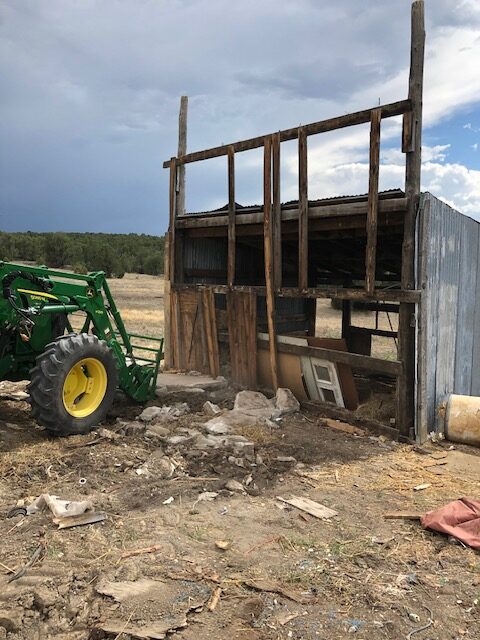
The chicken coop was already falling when I bought the place. Forty years of New Mexico winters had worked on it methodically — the posts tilted, the roof sagged in the middle, the boards had gone silver-grey the way old wood does when it’s been left alone long enough. It wasn’t a question of whether to take it down. It was a question of what to do with what was left.
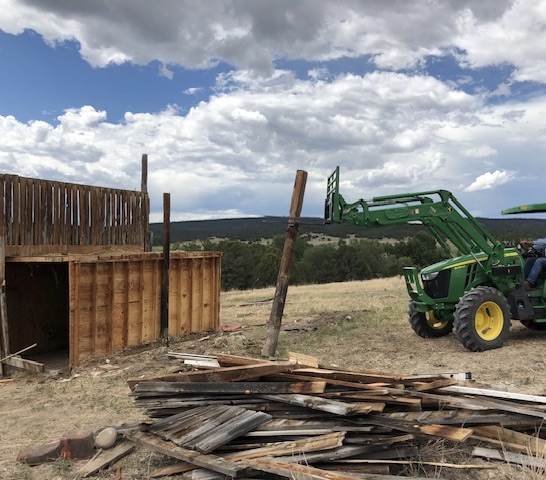
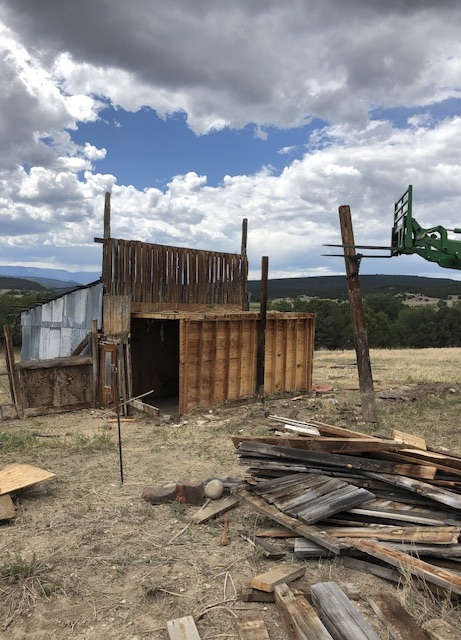
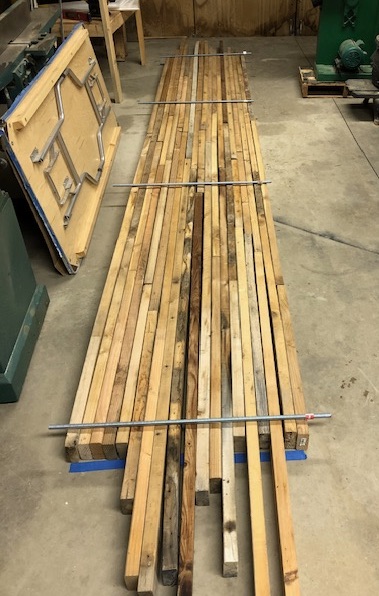
The answer was obvious once I looked at the timber. This wood had proven itself. It had stood through decades of wind and snow and summer heat at 7,000 feet and it was still dense, still sound, still worth something to someone who knew how to look at it. I pulled the John Deere up to it, worked the front loader into the frame, and started taking it apart.
The salvage pile grew over a couple of days. Boards that were usable went one direction. Boards that weren’t went another. When it was done I had enough material to work with and a clear idea of what I was building.
THE MATERIAL
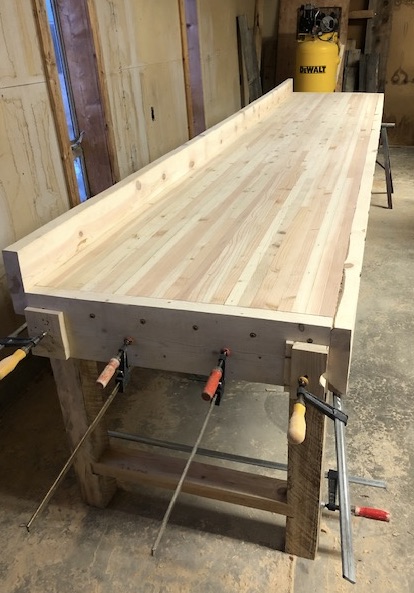
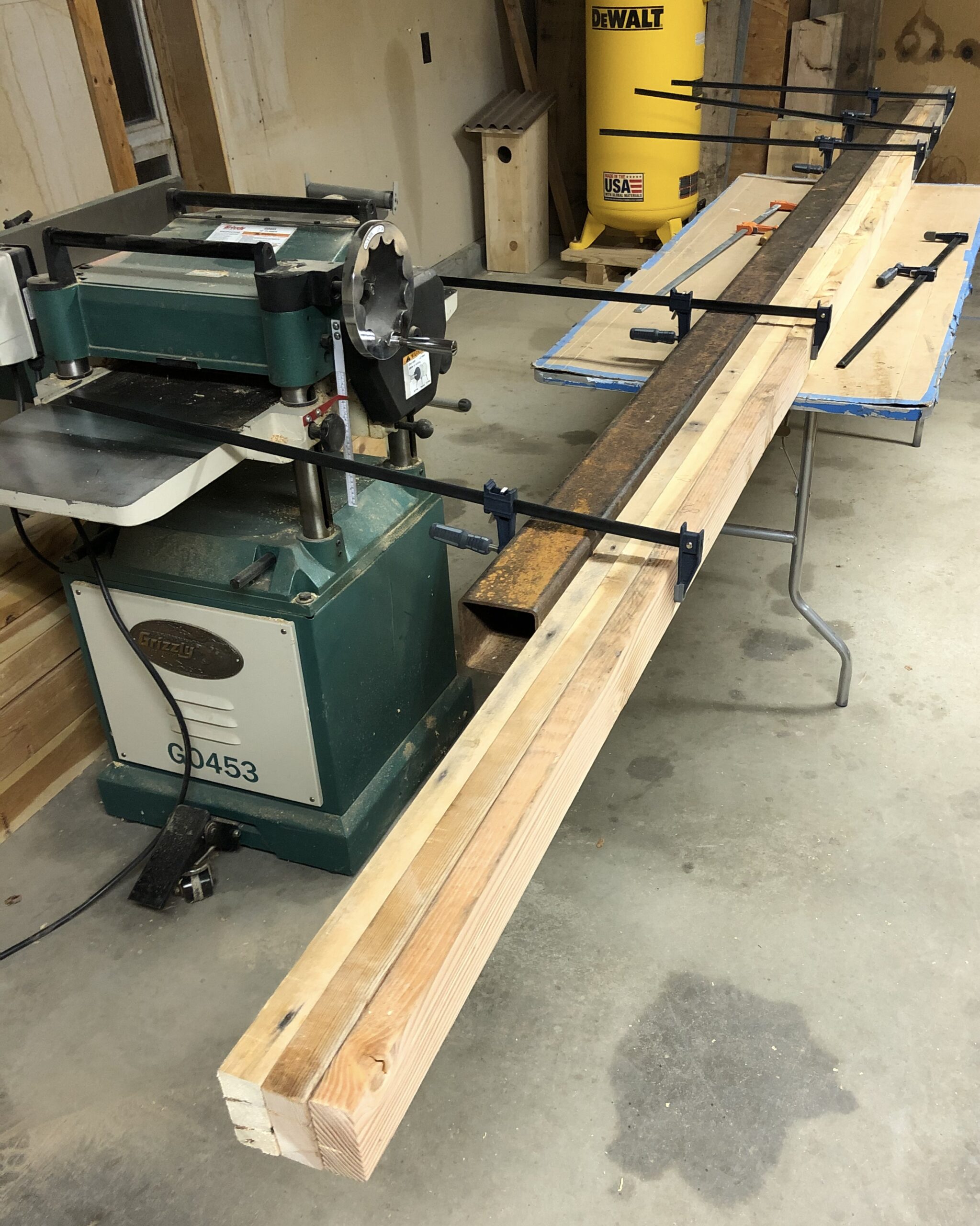
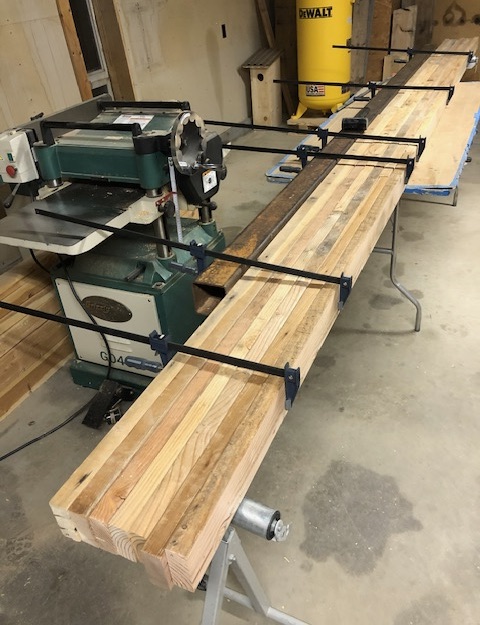
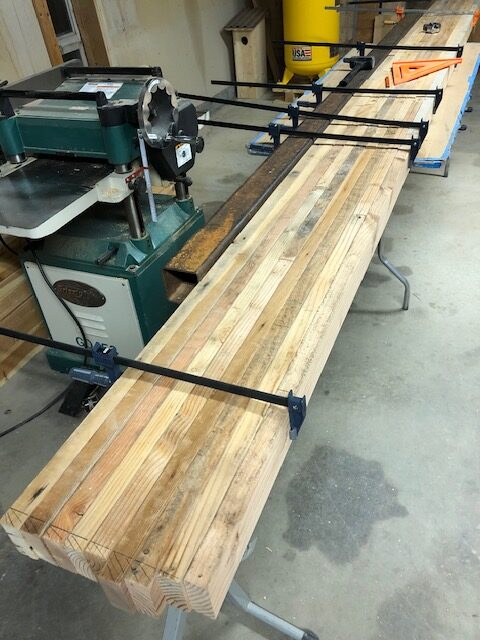
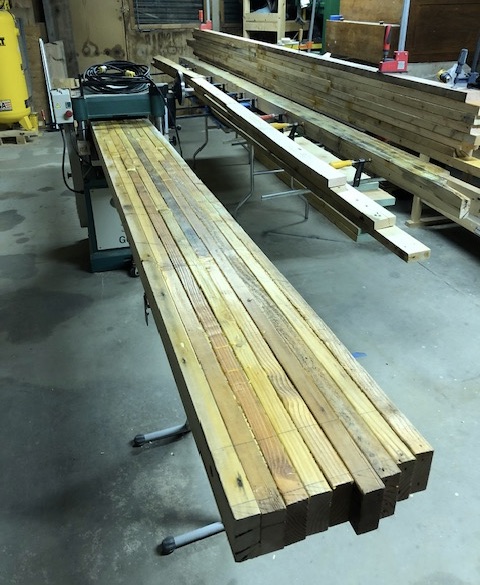
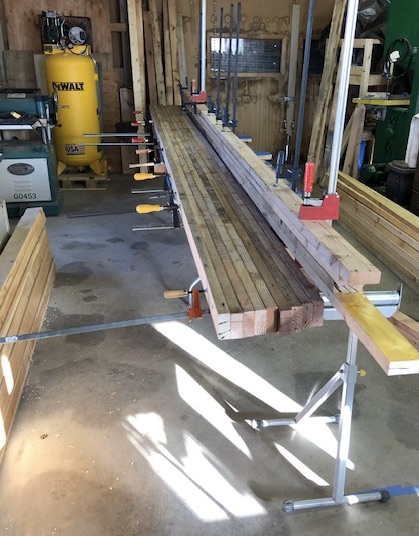
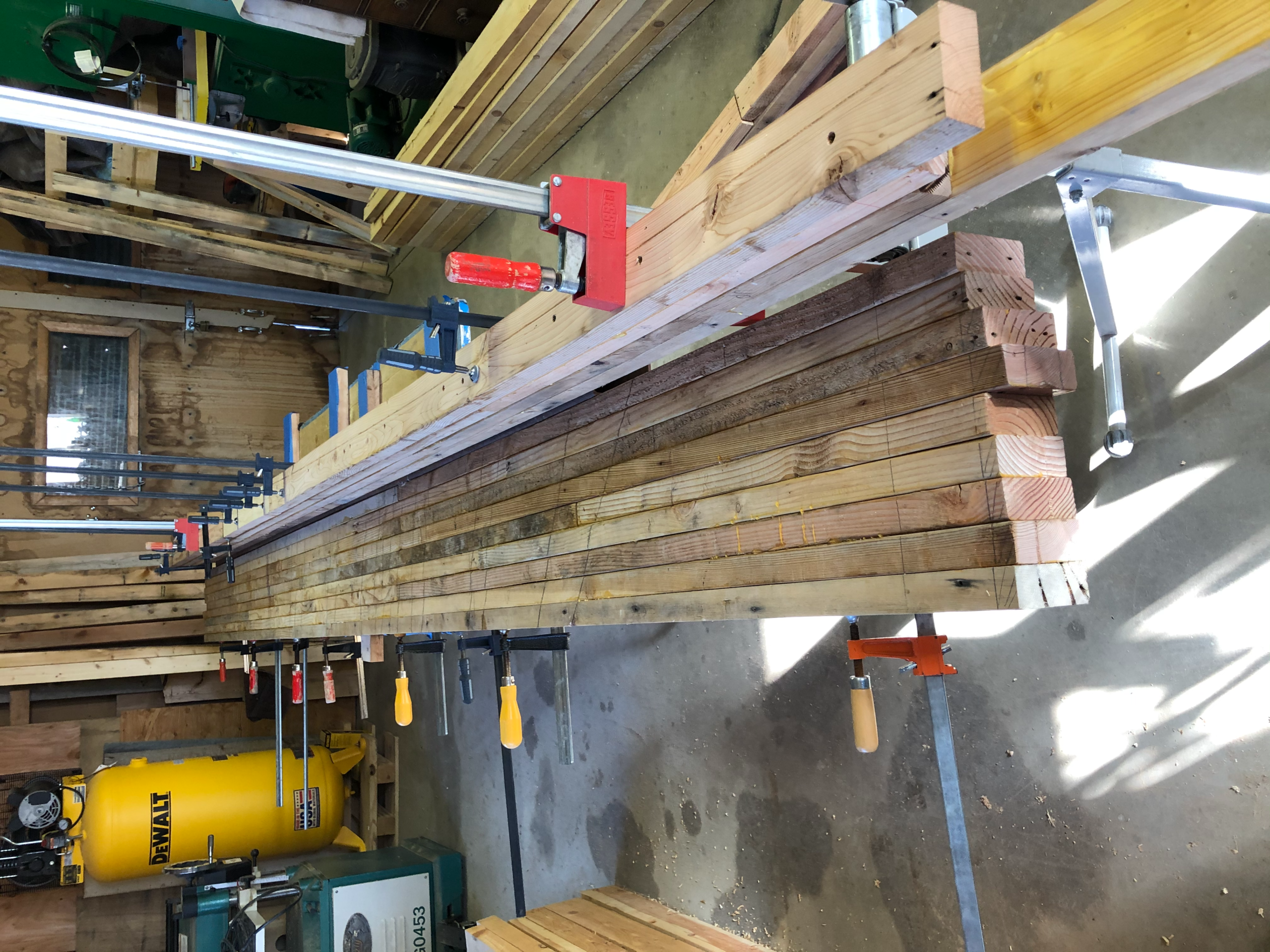
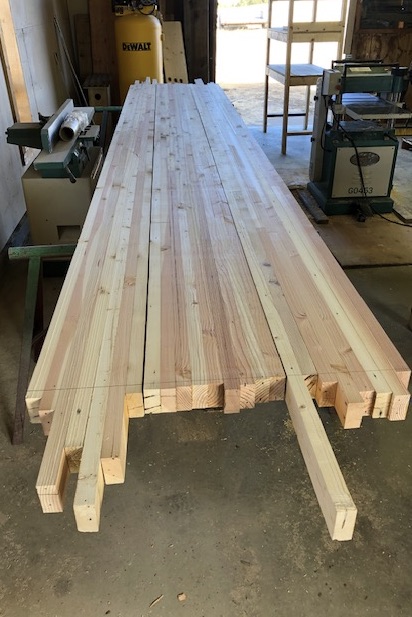
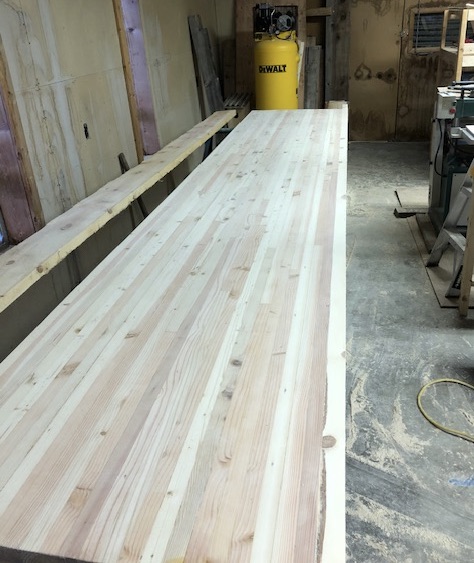
The bench top is laminated chicken coop timber — planed flat on the Grizzly G0453, jointed true, glued up in butcher block style. Before any of that, the wood had already done forty years of work on its own. At the elevation of the Mora River valley, with dry winters and hard summers, that timber had cured longer than most purchased lumber ever will. It was stable before it was touched. The planer just revealed what was already there.
The backsplash and skirt are Red Fir from a local sawmill in the mountains outside Carson National Forest — lost in the Hermit’s Peak fire of 2022. The timber was cut before that. It’s in the bench now.
THE BUILD
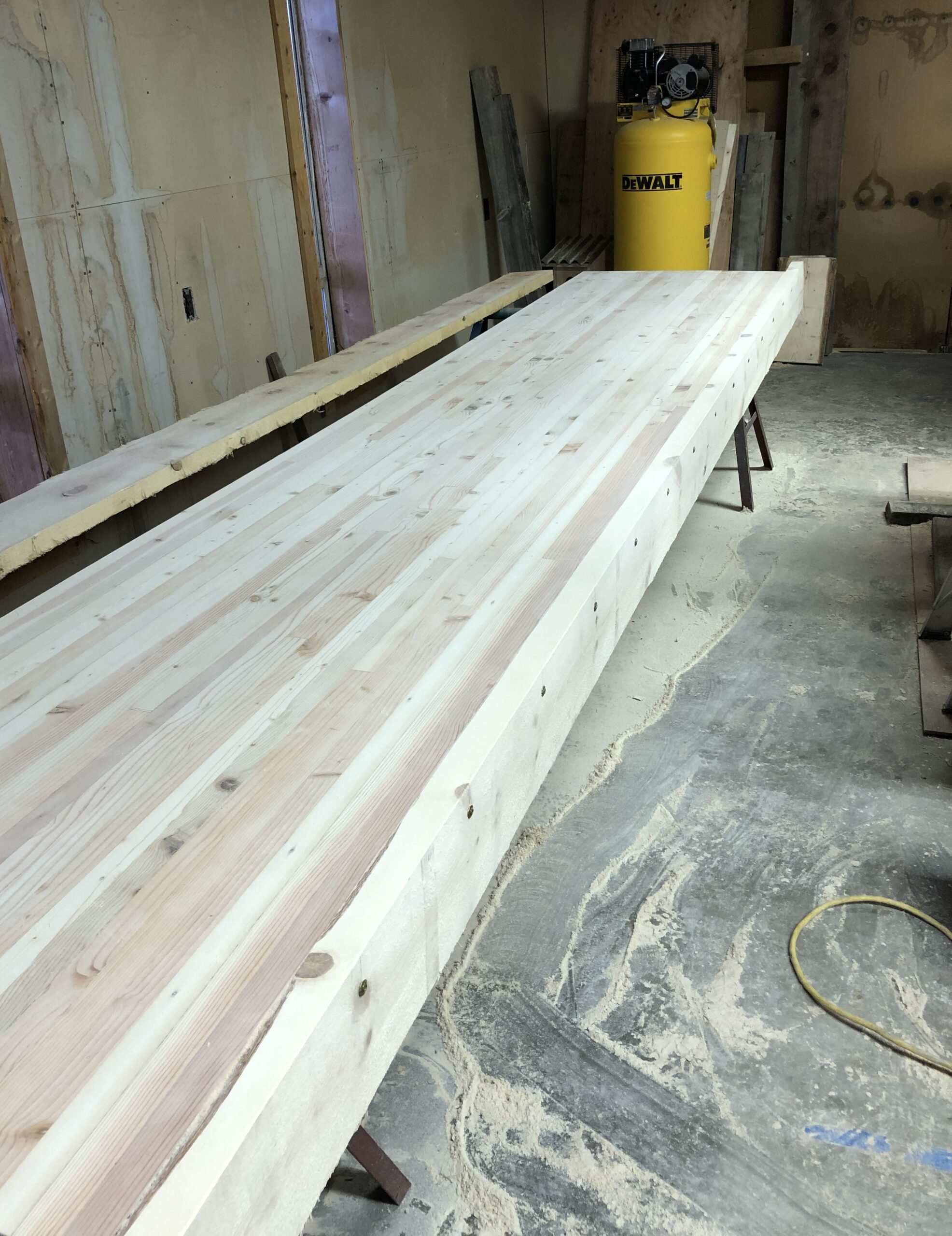
Thirteen feet long. Three feet wide. Three feet high.
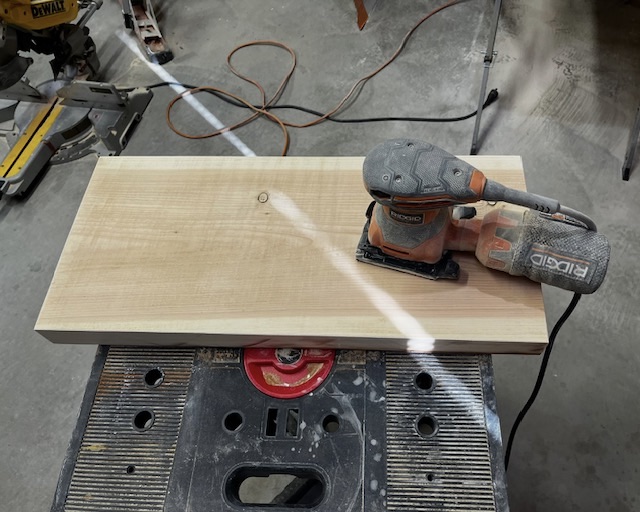
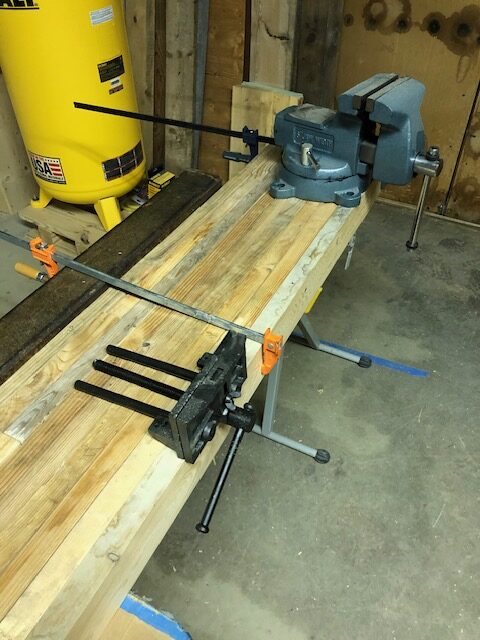
The top went together in sections — glued, clamped, then threaded rod run through the full width at intervals, washers and bolts torqued down until the lamination had no choice but to submit. The all-thread stays in the slab. The skirt covers it. You’d never know it was there unless you built it, which is exactly how it should be. Belt sander and palm sander came last, working the surface down after the planer had done the heavy lifting.
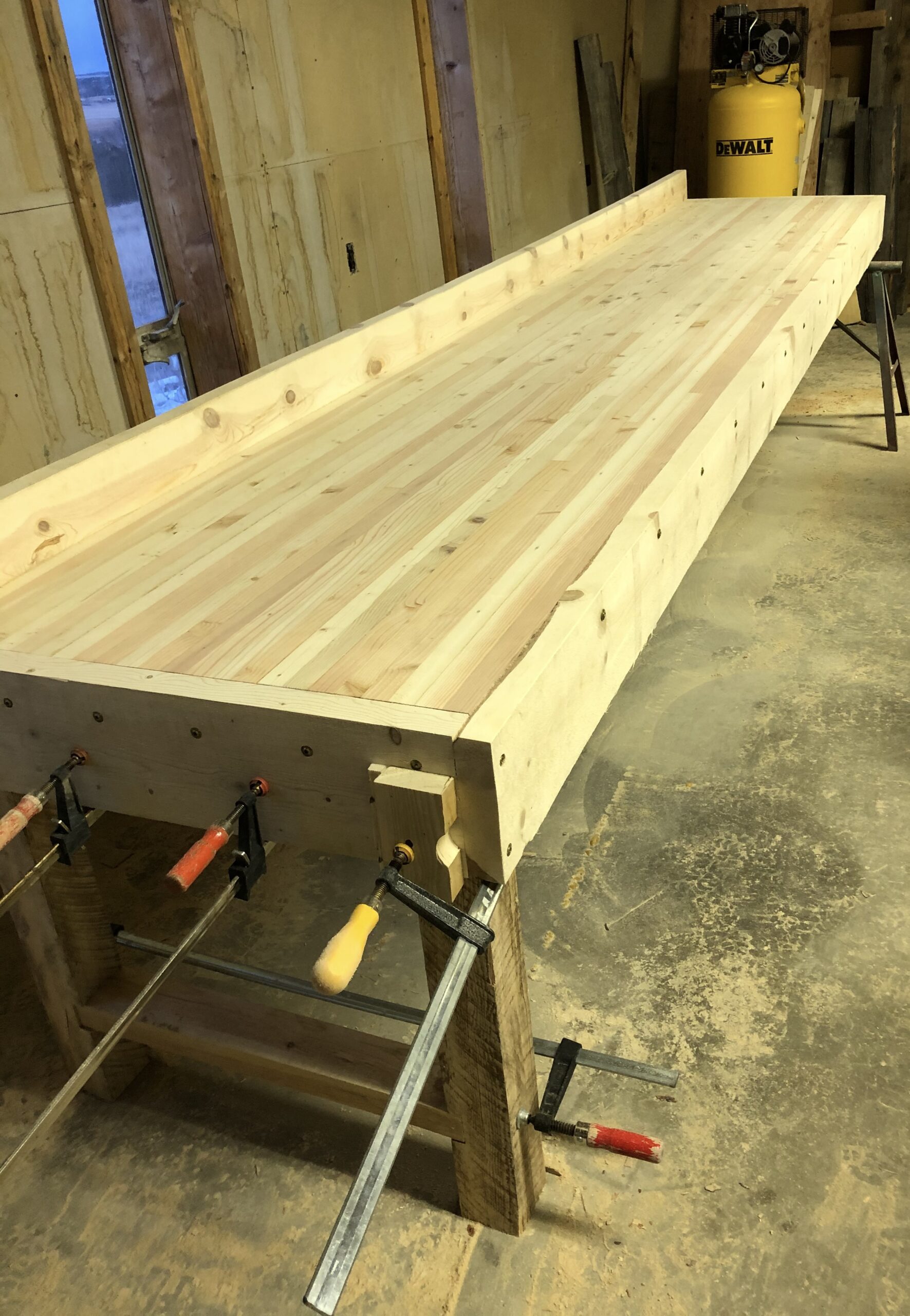
The legs are cut from an unused beam — mortise and tenon joinery, drawbored, fitted by hand. Darker than the top. Different wood, different age, different provenance. The bench holds its own history in the contrast.
Two vises, mounted flush to the front edge so the jaw face sits level with the apron.
The bench took the better part of a month. Not because any single step was complicated, but because a bench like this gets built in the hours left after everything else the ranch needs gets done.
WHAT IT’S FOR
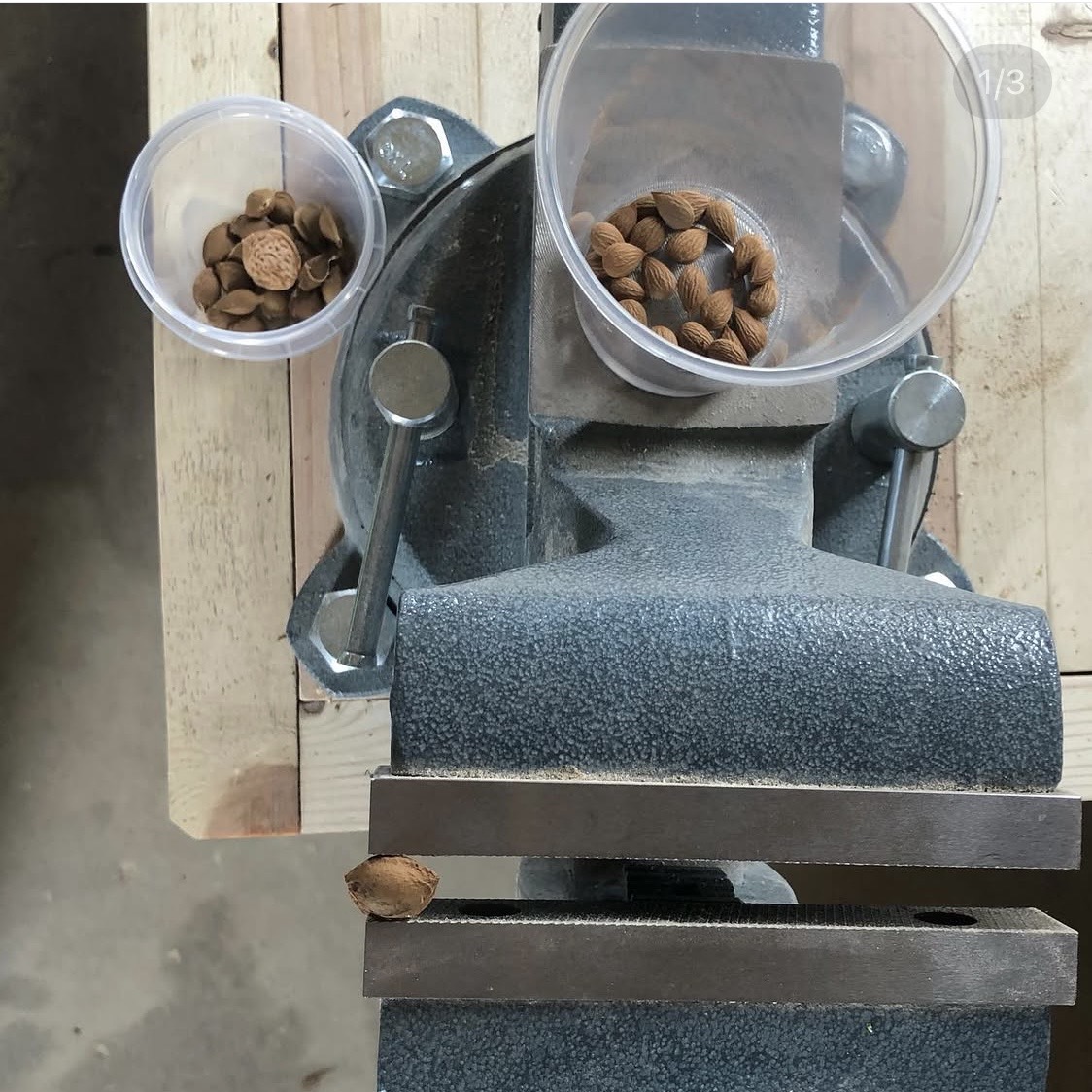
The first serious project on the bench was tree propagation. Cherry, plum, apricot from seed — cracked in the vise jaws, and sorted, planted into nursery cups lined up across the full width of the top. Cottonwood cuttings laid in aluminum trays along the back edge, waiting for roots. The bench covered end to end with the early stages of an orchard.
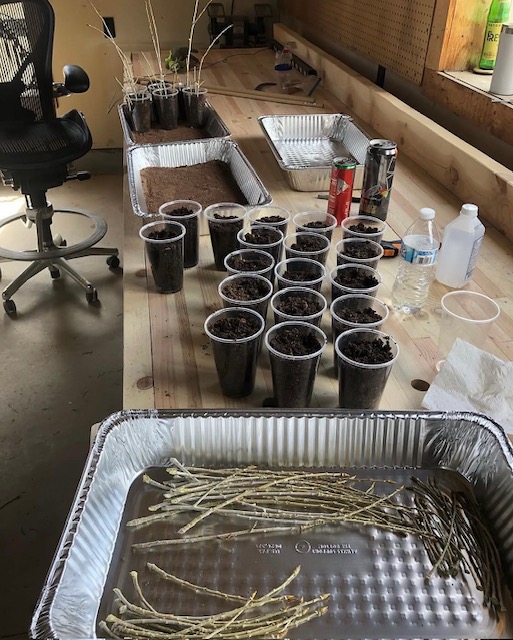
That’s what a bench is for. Not to be looked at. Not to demonstrate that you know what a mortise joint is. To hold the work while you do the work — whatever the work happens to be that season.
The coop is gone. The mill that cut the fir is gone. The bench is here, in the shop, at 7,000 feet in the Mora River valley. It will be here long after everything else that’s happened on this property has been forgotten.
That’s the point of building something right.