There’s a book called My Side of the Mountain. A boy leaves home, finds a hollowed-out tree in the Catskills, makes it his shelter, trains a peregrine falcon named Frightful, and not only figures out how to survive, but how to live. I read it as a kid and something in me went quiet and alert at the same time. Not excitement exactly. Recognition. The idea that a person could just — decide. Set out. Build something from what was at hand and become more themselves in the doing of it.
I just filed it away.
Years later, during a PBS pledge drive, I was struck again.
The man on the screen was older. Calm in a way that isn’t performed. He moved through remote Alaska like he’d been moving toward it his whole life — which, it turns out, he had. The footage had the quality of something you weren’t supposed to see. Color, but it felt like another era. A world that seemed both not-distant and completely bygone.
His name was Dick Proenneke. And what he was doing was building a cabin.
By hand. Alone. In the Alaskan wilderness, 170 miles from Anchorage, on the shore of Twin Lakes.
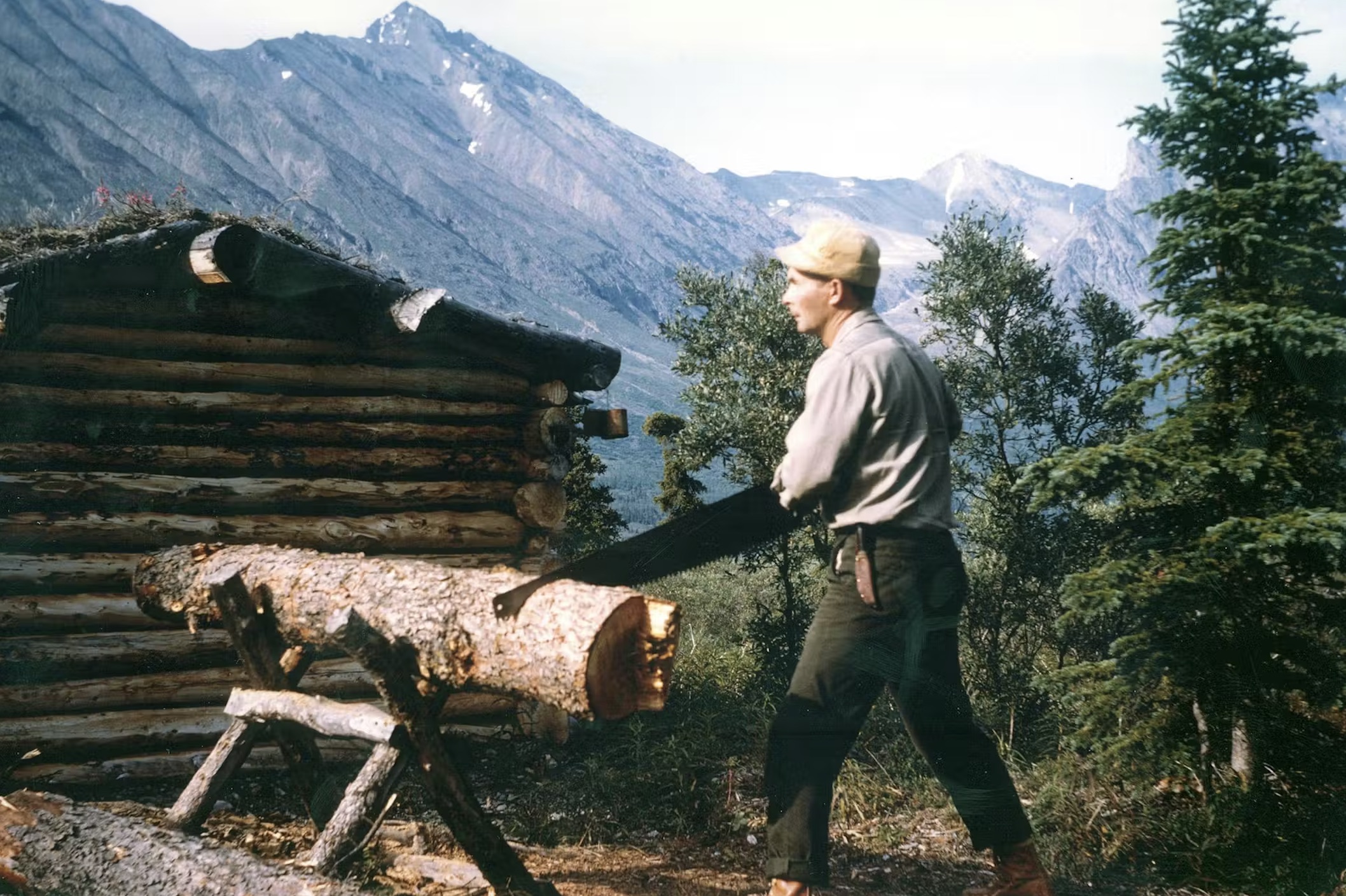
Not with a crew. Not with power tools. With hand tools he’d spent decades learning to use, from logs he selected and felled and peeled himself, with joinery so precise the cabin is still standing. It’s on the National Register of Historic Places now. You can fly in and see it.
I watched the documentary maybe ten times over the years. Each time, something different landed.
Here’s what most pieces about Proenneke lead with: the isolation, the wildlife, the self-sufficiency, the beauty of Twin Lakes in every season. All of it is real. All of it earns its place.
But they tend to skim past the number that matters most.
Dick Proenneke arrived at Twin Lakes on May 21, 1968. He was 51 years old.
Fifty-one. Not running from something at 25 on a romantic impulse, a backpack and a borrowed sleeping bag and the vague sense that something more was out there. He went because he was ready. Because he’d spent three decades as a diesel mechanic, a Navy man, a craftsman who understood how materials behave and what hands can do when the mind has been paying close attention. He went because he’d accumulated everything the life required and then asked himself, honestly, what he actually wanted to do with it.
That’s a different story. That’s a different kind of courage.
You know the other one. Jon Krakauer wrote it. Sean Penn put it on film. Christopher McCandless, 24 years old, gave away his savings, burned what cash remained, and drove north toward Alaska with a load of romantic conviction and not enough of anything else. The pull was real. The desire was genuine. The outcome was a tragedy — not because Alaska is unforgiving, though it is, but because desire without preparation is just longing dressed up as a plan.
McCandless went before he was ready. Proenneke went when he was.
That’s the whole distance between those two stories. It’s worth sitting with.
The wilderness doesn’t reward the bold. It rewards the prepared. There’s no romance in ignoring that distinction — only wreckage. Proenneke understood it. He wasn’t interested in testing himself against the land. He was interested in living alongside it, in full competence, for as long as his body would allow.
He stayed thirty years. Left in 1999 at 83, when his body finally had an opinion worth listening to.
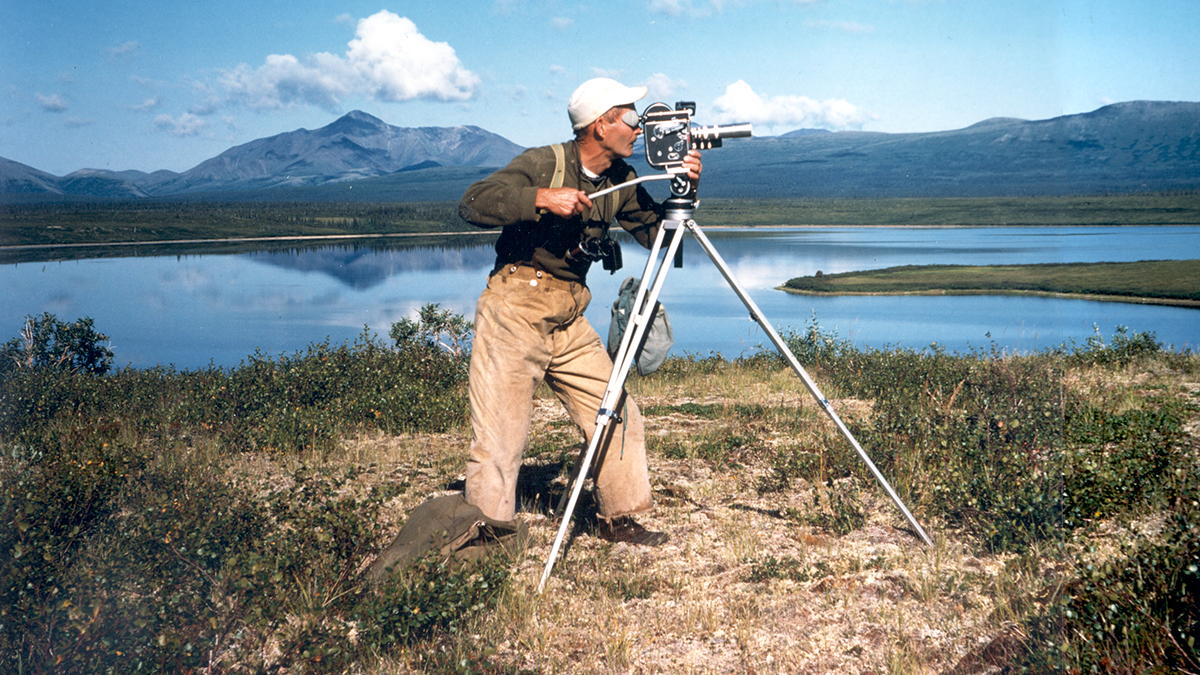
He brought a 16mm Bolex camera. Wind-up mechanism, no battery required. He set it on a tripod, framed the shot, hit record, and walked into the frame and did the work. Alone. Filming himself.
In 1968.
There was no audience. No platform. No incentive structure beyond the fact that the work deserved to be documented. He built his cache on stilts at the edge of the lake. He carved wooden hinges. He split shingles by hand from straight-grained spruce. He filmed all of it — not because anyone was watching, but because he believed it was worth preserving. Because a man cutting a mortise joint with a chisel he made from a bent nail tells you something about what’s possible, and that seemed worth keeping.
We call it content creation now. The word has a way of flattening everything it touches. Every week, someone points a camera at themselves in a forest and calls it authenticity. The footage rolls constantly. The incentive to document has never been higher or more democratized. And most of what gets made disappears in 48 hours because it was made for the attention, not the record.
Proenneke made it for the record. He was a pioneer of something that didn’t have a name yet — the deliberate, first-person documentation of a life lived on purpose. The footage survives not because it went viral but because it was true. Truth has a longer half-life than reach.
Old man, look at my life — twenty-four and there’s so much more. Neil Young wrote that in 1972, four years after Proenneke arrived at Twin Lakes. He wrote it for the caretaker of his ranch — a man who’d lived enough to carry that weight in the way he moved. The song isn’t about age. It’s about the distance between a life in progress and a life already inhabited. Young was 26. The old man knew something he didn’t yet. He could feel it.
Proenneke knew it. He’d been accumulating it since before the war.
His journals ran to 90 pounds of paper and 1.6 million words. He donated them to the National Park Service along with the cabin. There’s a companion book — One Man’s Wilderness, edited by Sam Keith from those journals — and it reads the way the documentary feels: unhurried, observant, the work itself as the subject. No performance. Just the honest account of a man who paid attention to everything and found that everything, paid attention to, turns out to be enough.
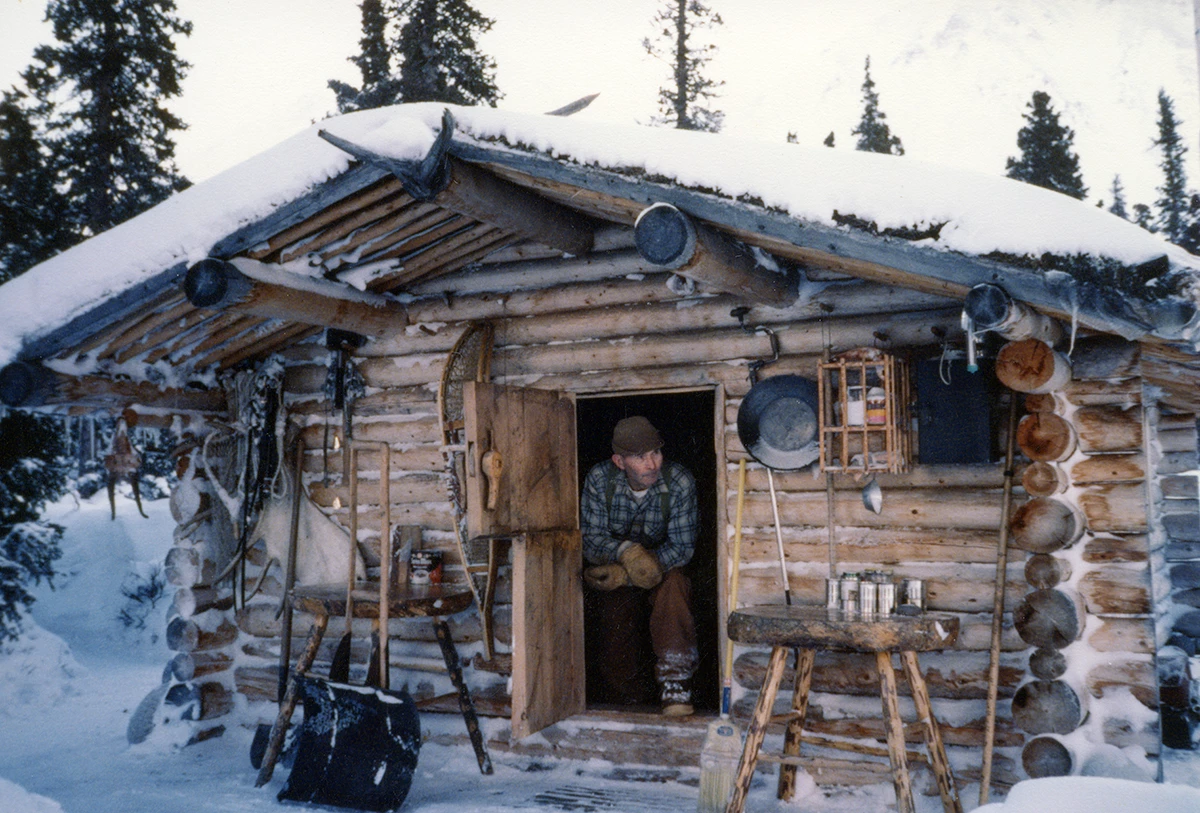
The cabin still stands. The hinges still work. Visitors fly into Lake Clark National Park and walk up to the door and feel something they can’t quite name but recognize immediately. It’s the same thing I felt as a kid reading about a boy in a hollow tree with a falcon on his arm, learning that a life could be shaped by intention. A certain kind of drift.
I think about that number again. Fifty-one.
There’s a version of the midnight question that sounds like: is it too late? The window closing. The life that was supposed to look different. The years spent accumulating the wrong things, or the right things in the wrong order, or simply time — the way it moves whether or not you’ve decided anything yet.
Proenneke answers it without trying to. He answers it by simply having been who he was, at the age he was, doing what he did.
It was never about going early. Youth isn’t a qualification for this kind of life — it’s often a liability. The restless go before they know what they’re doing. The prepared go when they’re ready. Proenneke was ready at 51. He spent the previous thirty years becoming ready, though he wasn’t thinking of it that way. He was just doing the work. Learning the tools. Paying attention. Living in a way that, when the moment arrived, he knew exactly what he needed and had all of it.
That’s not an accident. That’s a life lived on purpose.
The skills were the point. The decades were the point. The ten thousand hours of attention paid to how things are made and how they hold — that was the preparation. Not for some abstract future. For this. Specifically. For a cabin on the shore of Twin Lakes, hand tools laid out in order, a 16mm camera on a tripod pointed at a man who knew exactly what he was doing.
Most of us are still accumulating it.
That’s not a problem.
That’s the work.
One Man’s Wilderness: An Alaskan Odyssey by Sam Keith, based on Proenneke’s journals, is the natural companion to the documentary. The Alone in the Wilderness DVD is available through PBS. Proenneke’s cabin is a visitor attraction in Lake Clark National Park — accessible by floatplane from Port Alsworth.