
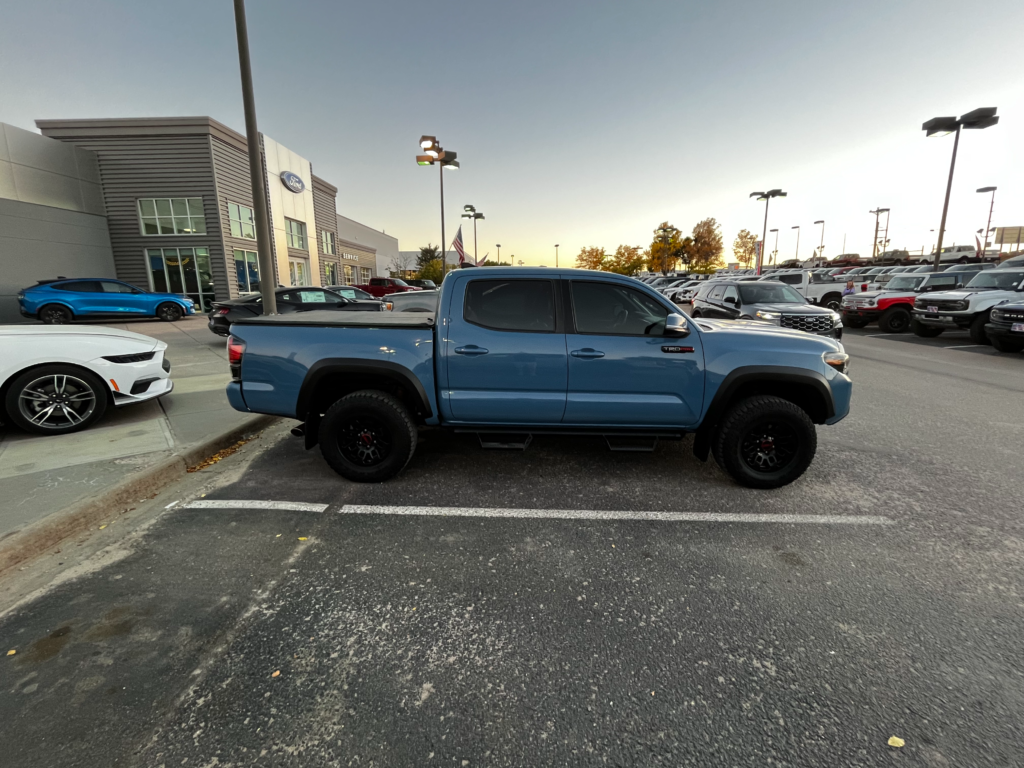
I didn’t get my driver’s license until I was twenty. This was a deliberate decision. I had a reasonably accurate sense of myself as a teenager — the kind of kid who might injure himself or someone else if handed that particular freedom too early. So I stuck to mountain bikes and skateboards and the reluctant charity of friends who had cars and better judgment. When I finally got my license, my first vehicle was an ’80s-era Range Rover. Green with a yellow pinstripe. A hand-me-down from my parents via my older sister. It took another thirty years and a lot of trucks in between before I landed on the right one: a 2018 Toyota Tacoma TRD Pro in Cavalry Blue. This is its build log.
My family had Range Rovers growing up. This was the 1980s and ’90s, before they meant what they mean now in America. The choice came from my British stepfather — his coming-of-age pride in all things English, the same instinct that had him wearing Wellington boots in the Seattle rain to the puzzlement of everyone who walked past. I loved that Rover. The classic shape, the commanding view from the cockpit, four-wheel drive for trips to the Cascades to hike or snowboard. When I decided to move to Maui, the sale of that truck did the heavy lifting. Like the giving tree, it gave me everything it had and never asked for anything in return.
There were other vehicles after that. A Forest Green Cherokee in Maui that I learned to drive stick in — improperly, as it turned out, on the misty switchbacks of Haleakalā at two in the morning, ending in a tree and a caved-in passenger side that acted as a sail in the trade winds for the next two years. A white 1998 Range Rover HSE that I’d lower at stoplights to impress girls until the air suspension gave out and the joke landed squarely on me. Two F-150s in silver, one totaled by a drunk driver in San Francisco, one with nearly 200,000 miles that I got for a few thousand dollars from a friend of a neighbor and drove into the ground across New Mexico and into Denver.
And underneath all of it, for over a decade, was a truck I kept looking at and couldn’t quite justify. Every used car search ended the same way — Toyotas were consistently thousands of dollars more than their class competitors. You’d see why in the war zone footage: guerrilla soldiers in the beds of trucks in Somalia, the Hindu Kush, the jungles of Southeast Asia — and it was always a Toyota. Built for whatever it encountered and engineered to keep going. I knew what I wanted. I just had to wait until I deserved it.
Good things come to those who wait.
—
There’s a version of this that starts with a spreadsheet.
Trim level, generation, mileage, price range, color availability. I did all of that. Third-gen TRD Pro — the 2016-2023 run — because the platform was mature, the off-road hardware was factory-sorted, and the resale held well enough that buying used didn’t feel like a compromise. TRD Pro because the Fox shocks, the skid plates, and the crawl control come standard, and retrofitting that hardware costs more than the premium you pay for the trim. Cavalry Blue because it was the right choice and I knew it when I saw it.
What the spreadsheet doesn’t capture is that I’d been thinking about this truck for two years before I bought it.
The thinking went like this: I needed a vehicle that could be a daily driver in Denver and disappear into Baja without apology. Something with enough clearance to handle a two-track without needing a spotter, and enough restraint that it didn’t announce itself everywhere it went. The TRD Pro in Cavalry Blue is exactly that — capable without performing capability. It looks like a truck that’s been places, not a truck that wants you to know it’s been places.
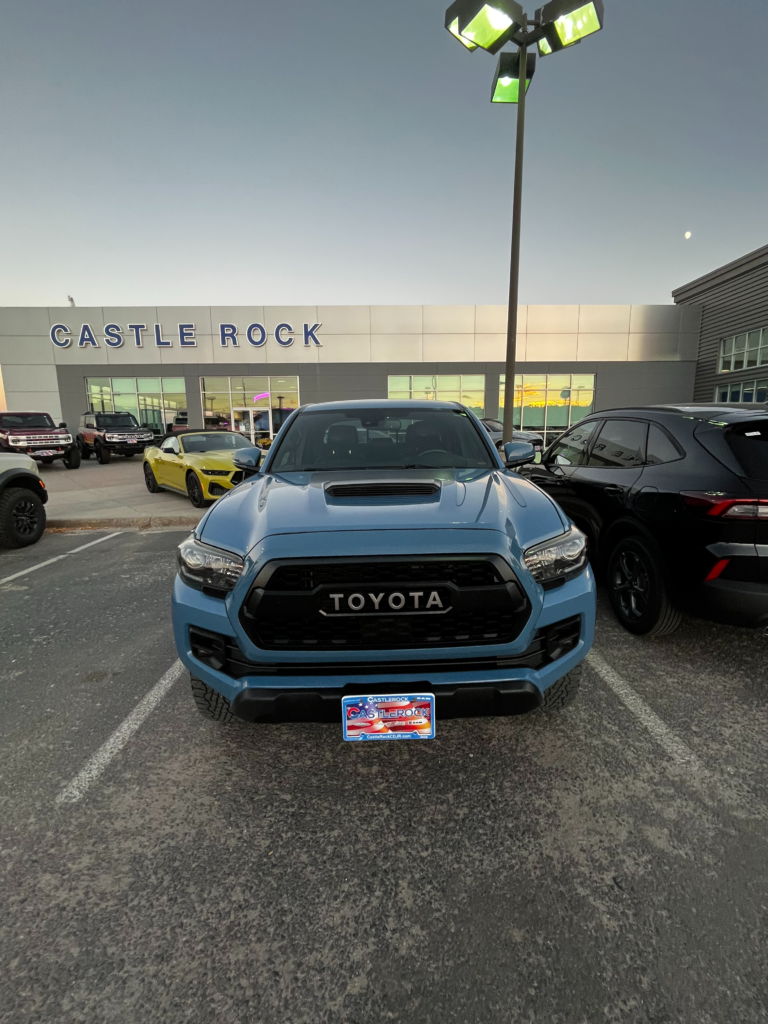
It came to me stock, which is where this series begins.
What’s on it now
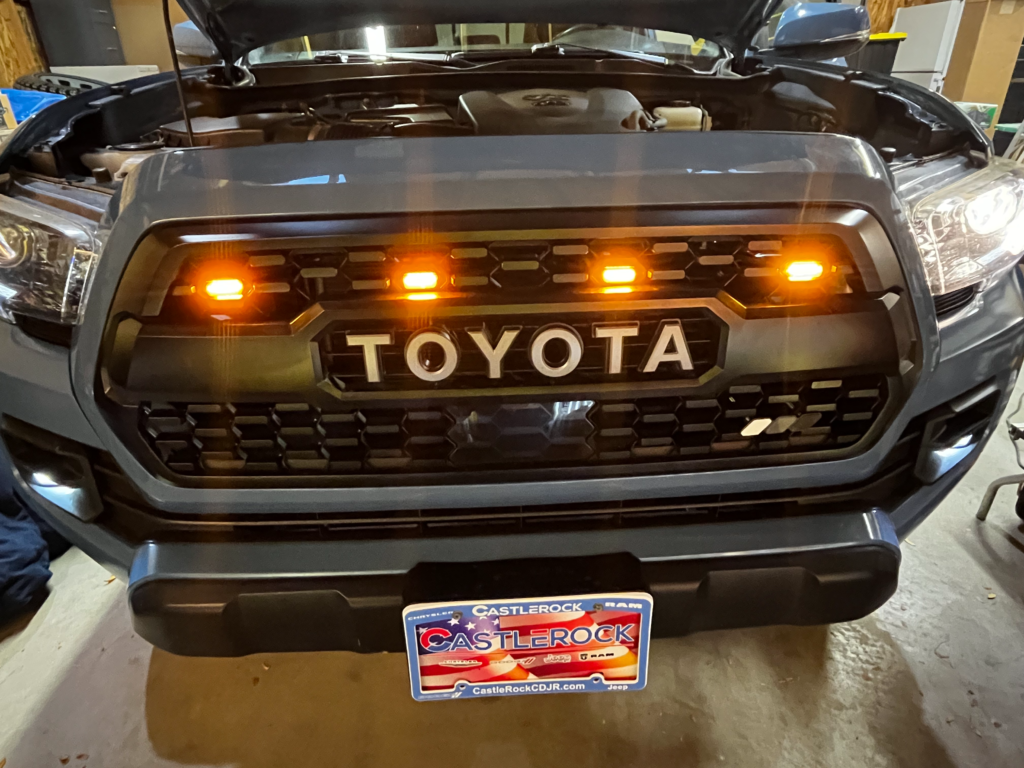
The only modifications so far are cosmetic. Raptor-style fog lights in the grille, tinted indicator lights in the mirrors, a grey-scale TRD flag badge in the grille. Nothing that changes how it drives. Everything that changes how it reads.
Where it’s going
The build will happen in layers, prioritizing function over flash and keeping the truck nimble enough to be a daily driver. Fuel economy matters. So does the ability to disappear down a dirt road in Baja without looking like an expedition vehicle that got lost.
The list, roughly in order: roof rack, hard tonneau cover or cap, a Decked drawer system, additional lighting, a full camera system, front and rear bumper upgrades.
Not all at once. Each addition gets its own chapter — what it is, why it was chosen, how it performs in the real world. This is the build log, written as it happens.
Why this truck, why now
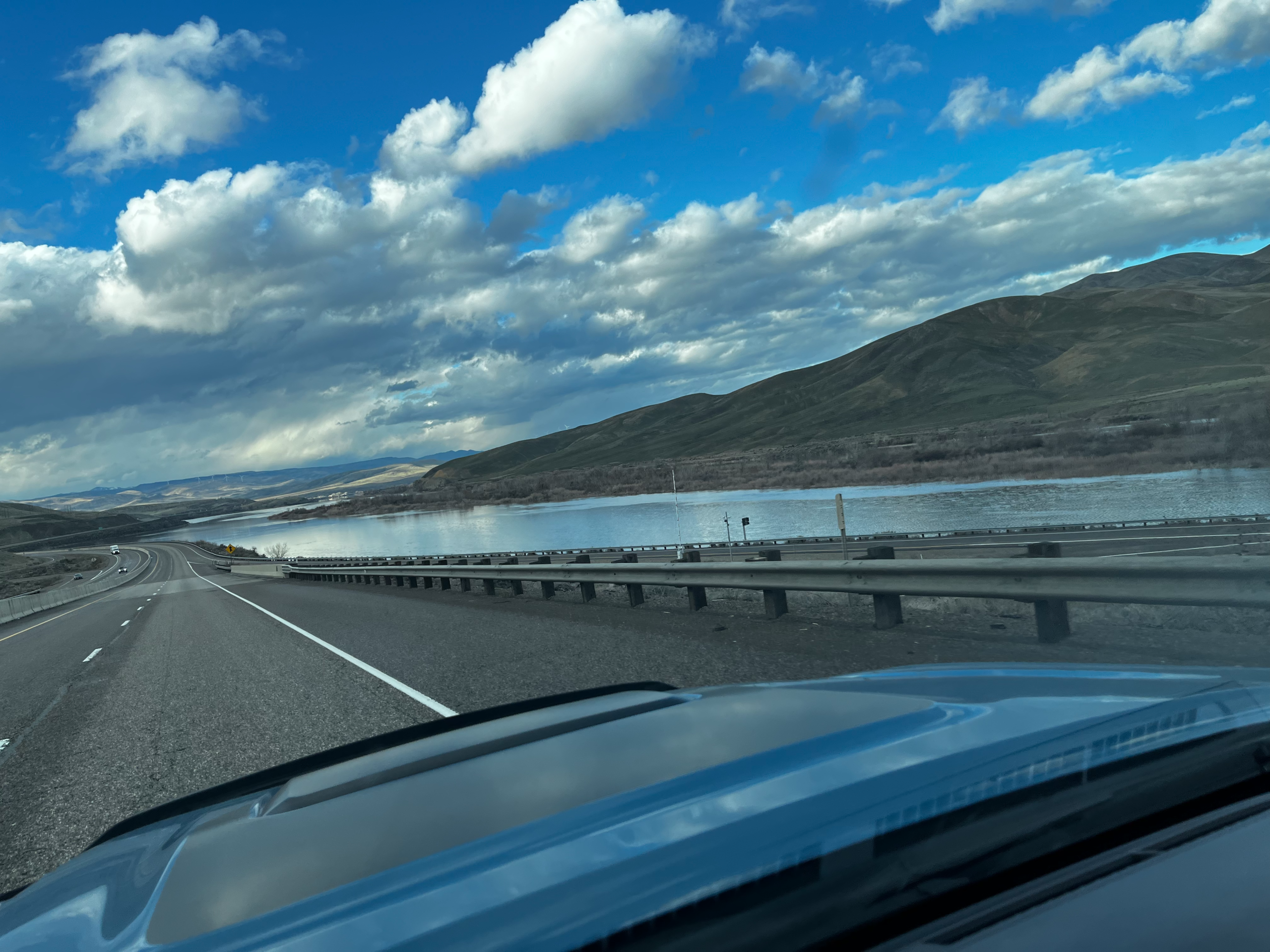
Pacific Drift runs on the premise that a different life is actually possible. Part of that life involves being able to point south on a Friday afternoon and end up somewhere without cell service by Sunday. The Tacoma is the vehicle that makes that practical. Not a weekend toy. Not a statement. A tool — specific, considered, and a long time coming.
Chapter 2 is the roof rack. We’ll get into it.
STORIES FROM THE ROAD THAT LEAD STRAIGHT TO YOU