
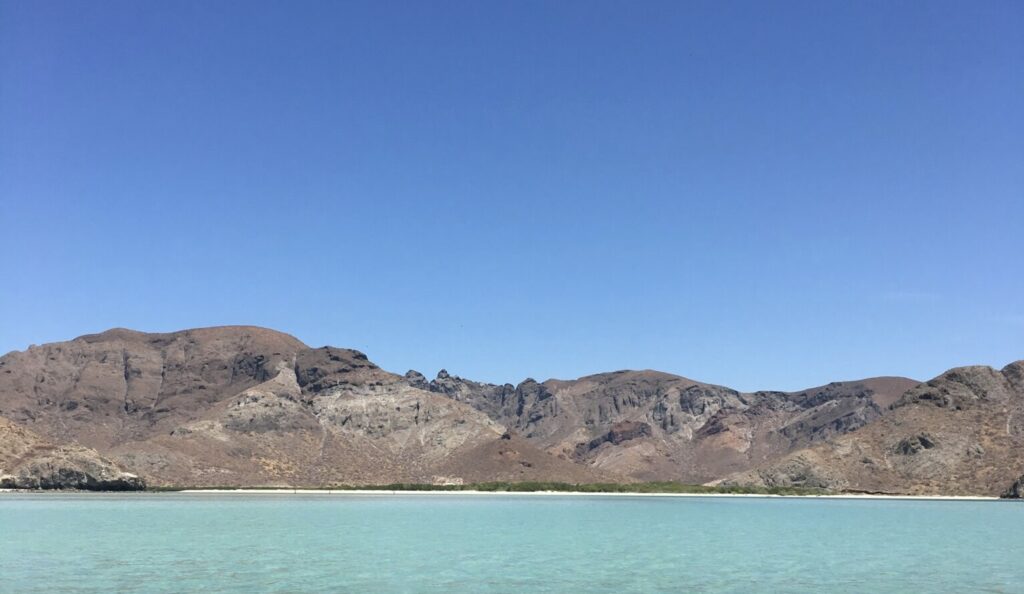
Playa Balandra sits at the end of a road most people never take. They said it was one of the most beautiful beaches in the world. I’d heard that before. The places that earn that description usually know it — you can feel the machinery of reputation working on you the moment you arrive, telling you how to feel before you’ve had a chance to feel anything.
I drove out from La Paz on a Friday morning and parked around ten. It was mostly locals — families arranging their things in the shade, kids already in the water, the easy unhurried rhythm of people who don’t need to document where they are to believe they’re there. I liked that. I moved along the edge of the bay toward the far side of the cove and let the water decide the pace.
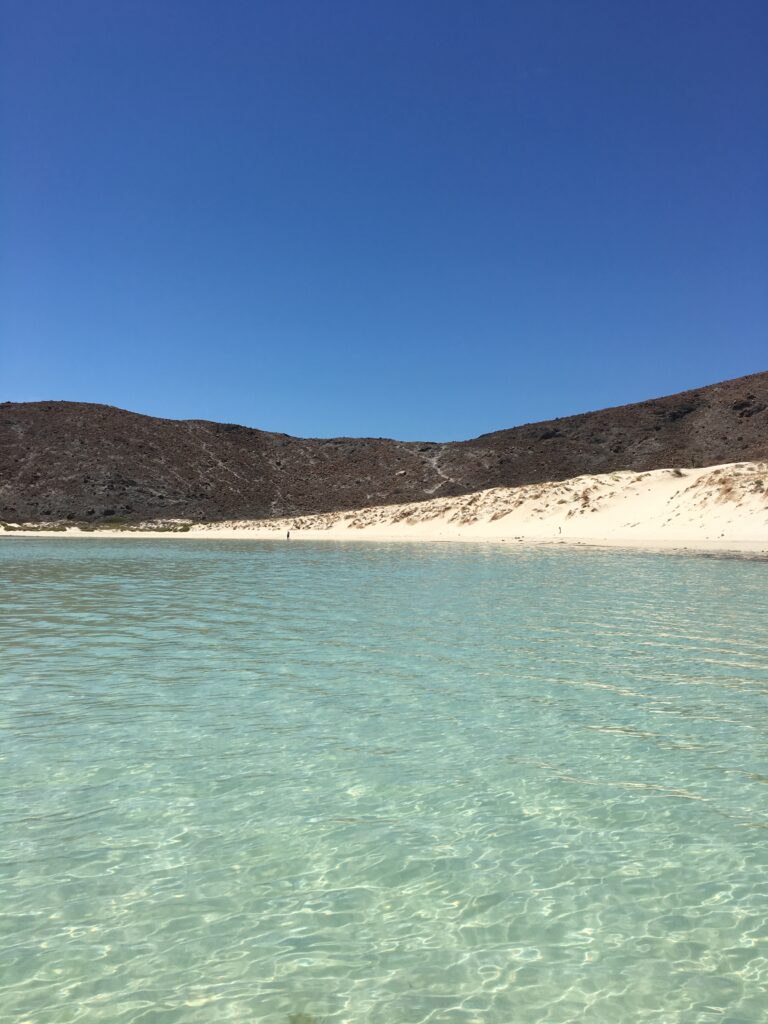
The bay at Balandra is protected — a natural bowl of volcanic rock and white sand that holds the Sea of Cortez inside it like something cupped in two hands. The water is shallow for a long way out. Waist-deep, then knee-deep, then waist-deep again. You don’t swim across it so much as walk through it. The bottom is sand and light and nothing else.
I crossed toward the far side of the cove.
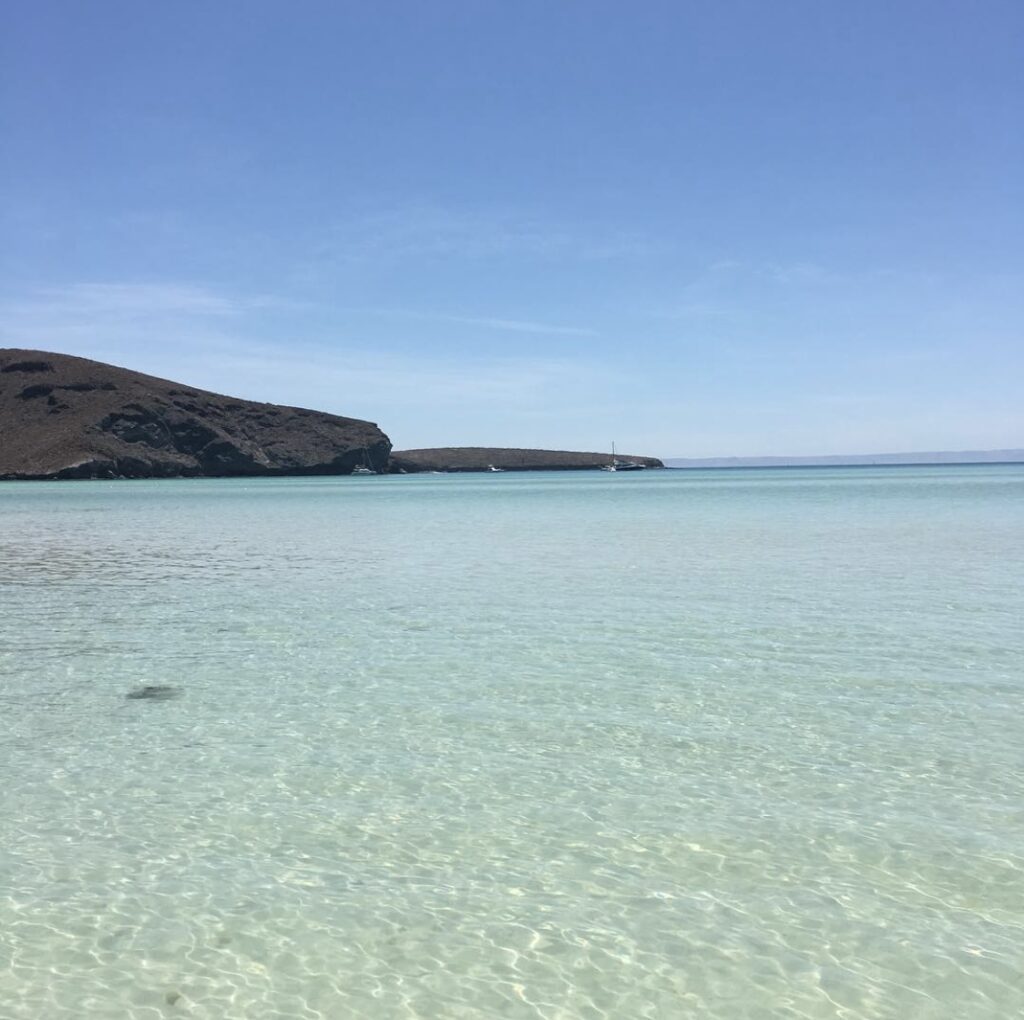
There’s a second beach over there — scalloped, smaller, tucked against the rock where the headland curves back on itself. You can see it from the main beach if you know to look. Most people don’t look. By the time I reached it I was alone. Just the sound of the water moving over sand and the occasional creak of a sailboat at anchor out past the mouth of the bay.
I stood in it for a long time.
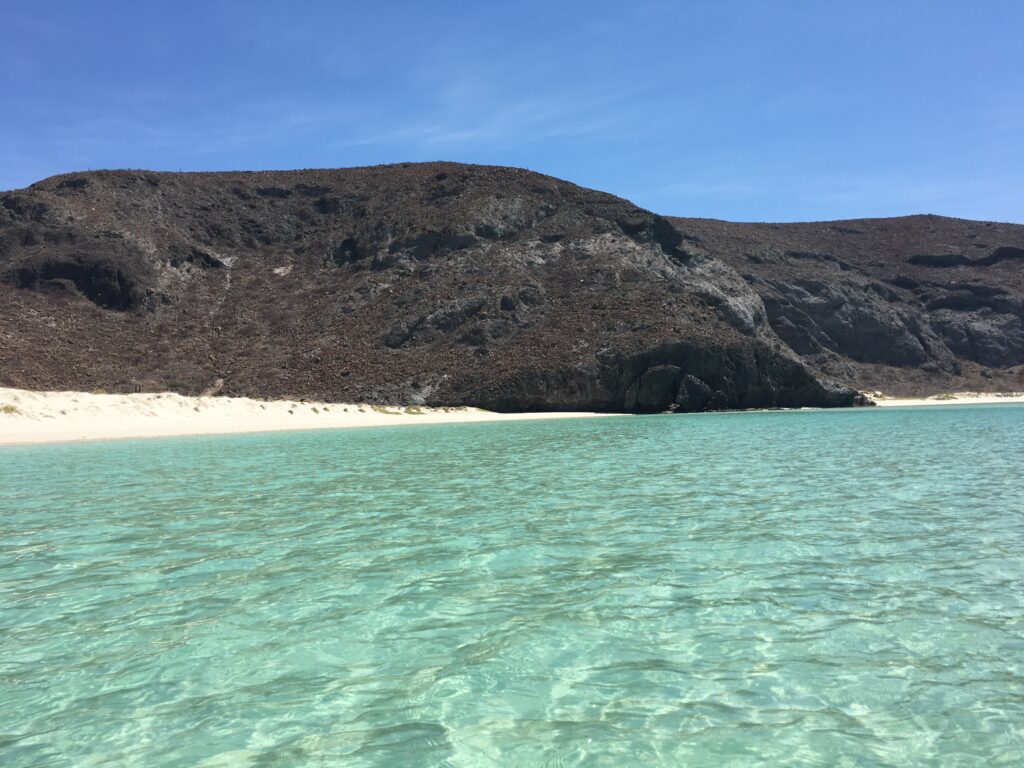
Jacques Cousteau called the Sea of Cortez the aquarium of the world. Out past the headland, maybe sixteen miles north, Isla Espíritu Santo rises out of the water — a UNESCO World Heritage Site, uninhabited, volcanic, one of the genuinely wild places left on this stretch of coast. I could see its outline from where I was standing. I had the beach to myself. I was at what people call one of the most beautiful places on earth and I had it to myself at ten in the morning on a Friday in May.
The sun does something to you at Balandra that I haven’t figured out how to explain without it sounding like a brochure. It’s not relaxation exactly — it’s more than that. It’s a kind of recalibration. The water is warm and clear and shallow enough that you stop thinking about where your feet are. The breeze off the Sea of Cortez arrives without announcement and leaves the same way. I stood there alone on that scalloped beach and something that had been running fast began to slow. Sometimes that’s exactly what you need.
Getting there: Balandra is about 30 minutes north of La Paz on Federal Highway 11. It’s a protected natural area — entry is timed, capacity-controlled, and there’s a small fee. Go early. The difference between 8am and noon is the difference between solitude and a beach club.
What to know: The bay is shallow for hundreds of meters in every direction. Bring water shoes if you want them. You don’t need them but the sand shifts and there’s occasional rock. The famous Mushroom Rock — El Hongo — is in the main bay and worth seeing, but the far side of the cove is where you want to be.
What’s out there: Isla Espíritu Santo is visible from the beach. Day trips run from La Paz — about an hour by boat. Sea lions, manta rays, whale sharks in season. It deserves its own day.